
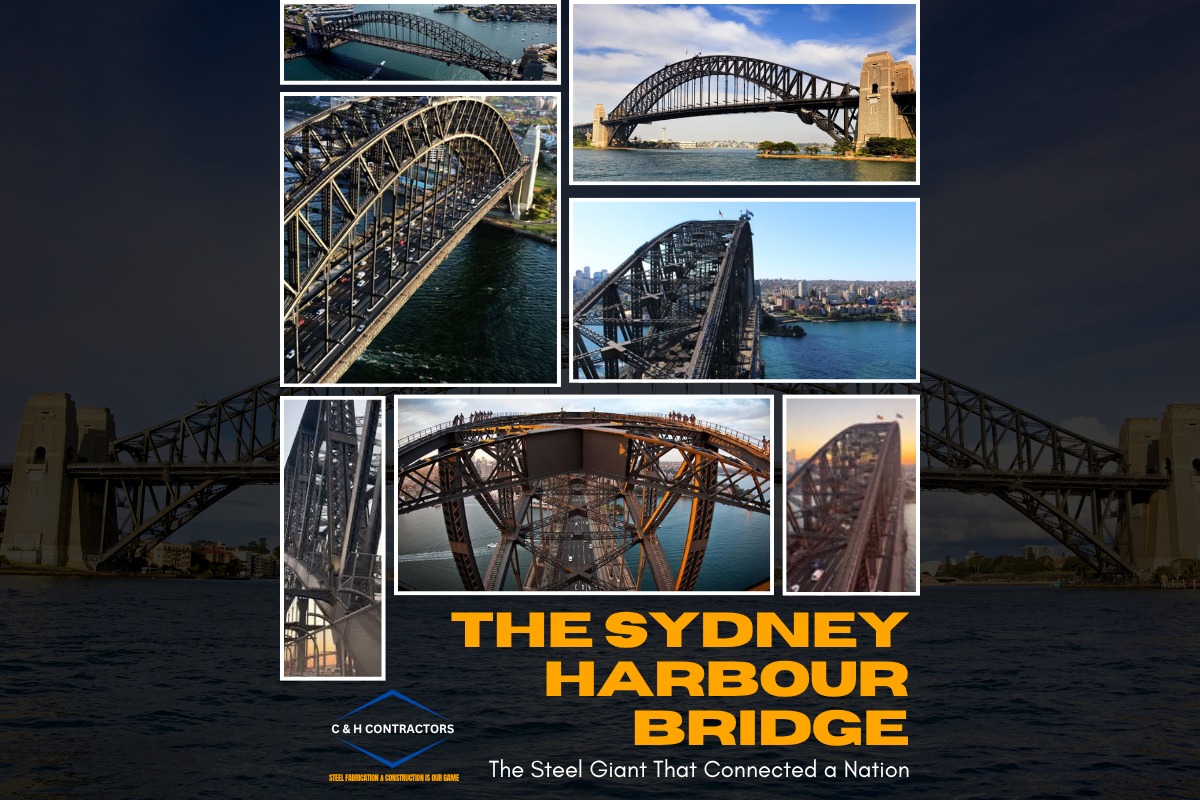
The Sydney Harbour Bridge: The Steel Giant That Connected a Nation
Before modern cranes, laser alignment and digital modelling existed, the Sydney Harbour Bridge was already proving what steel could achieve.
Known around the world as “The Coat-hanger”, this massive steel arch became one of the most ambitious engineering projects of its time. It connected more than two sides of a harbour — it helped transform the future of an entire city.
Steel is the backbone behind the vision.
A Landmark Built on Steel Precision
The Sydney Harbour Bridge was built using more than 52,000 tons of steel and held together by around 6 million rivets.
The bridge was assembled piece by piece from both sides of the harbour until the two steel arches met perfectly in the middle.
Think about that for a moment: no modern digital modelling, no advanced software, no laser-guided systems — just engineering precision, fabrication knowledge and complete confidence in the steel being used.
Why the Arch Design Matters
The arch design works by transferring load evenly through the structure. This allows the bridge to carry enormous weight while remaining stable under constant traffic, wind, weather and movement.
- More than 52,000 tons of steel used
- Around 6 million rivets holding the structure together
- Built from both sides until the arches met in the centre
- Designed to distribute load through the steel arch system
The Real Lesson for Modern Construction
Nearly a century later, the Sydney Harbour Bridge still stands as one of the strongest examples of what happens when there is real discipline, planning and klem on the steel being used.
For C&H Contractors, structures like this are more than landmarks. They are reminders that steel fabrication, structural accuracy and proper execution can turn impossible-looking ideas into lasting reality.
The Sydney Harbour Bridge proves that steel is more than a building material — it is what makes bold engineering possible.
The greatest structures in the world all have one thing in common: steel is the backbone behind the vision.


